Introduction
• The EU COST action “The String Theory Universe” ran from 2013-2017.
• COST actions provide funding for networking via workshops, conferences and exchange visits.
• This action was led by female scientists and one of its aims (beyond scientific excellence) was to support the development of women.
Gender workshops
• Three workshops were held exploring “String theory and gender”: Valencia (2015); Paris (2016) and Southampton (2017)
• This talk will report on the outcomes from these meetings and ongoing actions.
• Thanks to Anna Ceresole, Sebastian Fischietti, Mariana Grana, Gabi Honecker, Yolanda Lozano, Marian Lledo, Andy O’Bannon, Silvia Penati, Michela Petrini for collecting data and providing input
Diversity and gender
• Diversity: gender, LGBTQ+, disability, ethnicity, socio-economic background, religion, carers…
• Less favoured groups share many issues but some issues are specific to each group.
• Intersectionality is important e.g. white American Harvard educated woman typically within favoured group.
Leaky pipeline for women
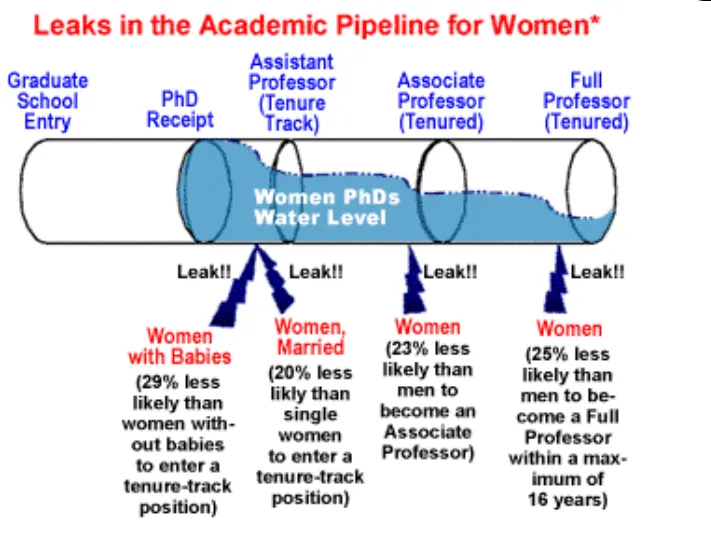
Key transition points
• 1. Choice of high school and subjects
• 2. Choice of university undergraduate course
• 3. Entrance into graduate school
• 4. Continuation to postdoctoral research
• 5. Obtaining a long term/tenure track position
• 6. Progression to full professor
• 7. Progression to institute director, group leader etc
School, undergraduate and graduate school
• Huge variations between countries: ~15-20% women in UK physics undergraduate programmes cf ~50% in southern European countries.
• Women are more likely to continue in physics in departments where there are more female staff.
• Women are less likely to continue in competitive environments in which students are ranked against each other.
PhD -> Postdoc -> Tenure track
• Transitions are directly under the control of the string theory community.
• Is there a leaky pipeline for women working in string theory?
Tenure track -> senior positions
• Back to cultural variations: many issues have to be addressed locally, rather than by the string theory community as a whole.
• Conference talks, organising committees, journal editorships and other measures of esteem in our community relevant for promotion.
Effecting changes: diversity plans
• Monitor diversity data.
• Analyse causes of issues.
• Implement actions to provide support and improve working conditions.
• Evaluate impact of actions.
• (Carrot and) stick approach: satisfactory diversity plans required by some research councils and governments (UK, IR, NL)
Effecting change: good practice of other communities
• Many physics/astronomy research communities have well established working groups on gender and diversity.
• Actions include: sessions in major conferences; websites collecting resources; diversity representatives on organising committees; monitoring of gender statistics for fellowship and job applications; mentoring; support for harassment
Is diversity a problem?
• In a crowded research field such as string theory, diversity may not be seen as a problem, as jobs are always filled by high quality candidates.
• Reasons to care:
1. Increasing diversity changes a department’s culture and attracts students.
2. Increasing diversity generically improves performance.
Format and outcomes
• Networking between women faculty, postdocs and students
• Exploration of common issues and potential actions
• Input from external researchers from social sciences
Gender statistics
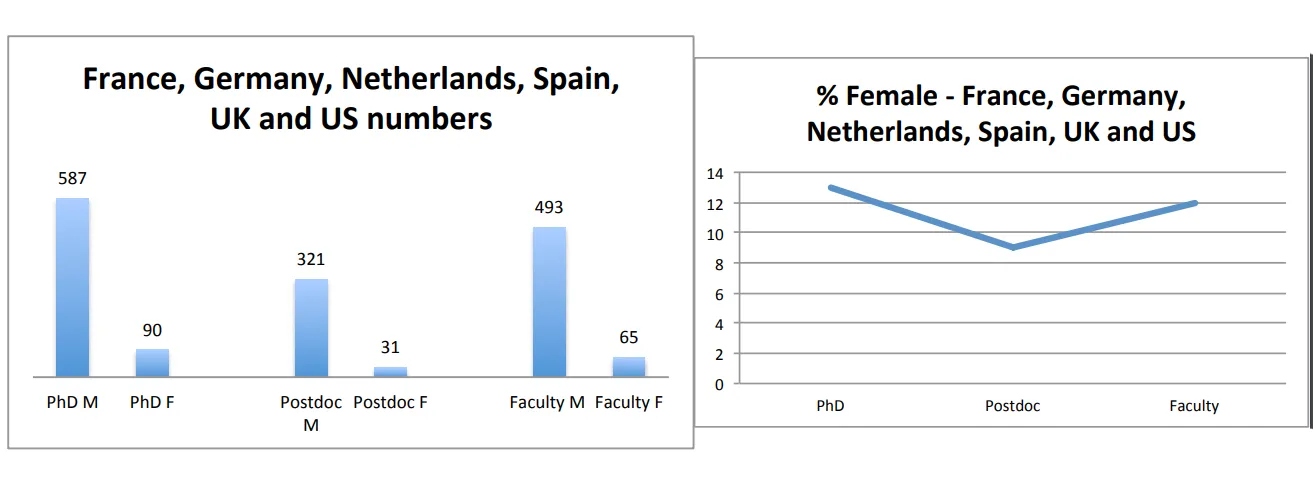
• Collected cross-sectional data on gender split of faculty, postdocs and students in France, Germany, Holland, Italy, Spain, UK and the US.
• Future plans: extend to more countries and collect longitudinal data.
Gender statistics
Breakdown by country
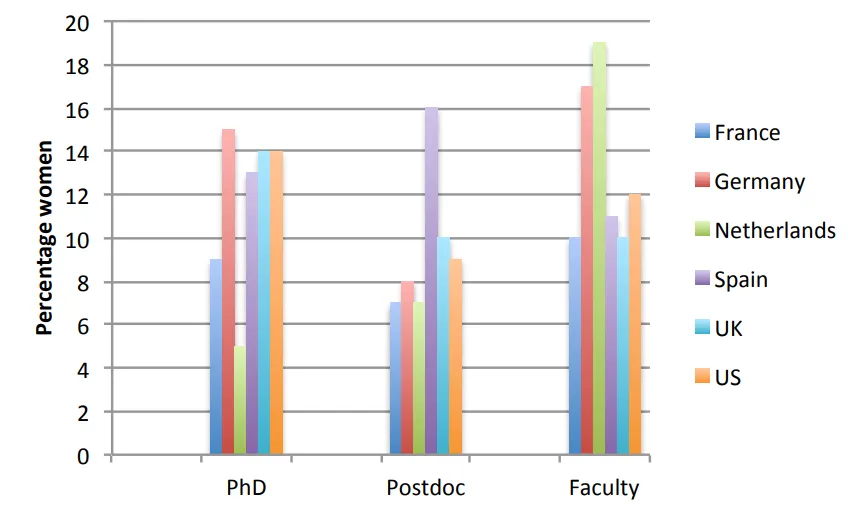
Comments on data
• Female faculty percentage in Holland attributable to gender initiatives e.g. competitive tenure track schemes for women only.
• Percentage of women dips at postdoctoral level and then increases at faculty level.
• Percentage of women in hep-th is lower than in physics as a whole e.g. in US ~20% physics PhDs, ~15% physics faculty are female.
Need for further data
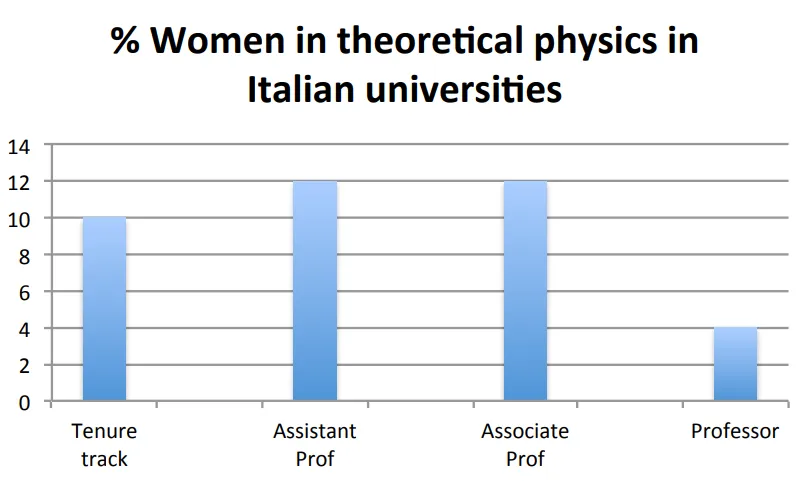
• Need to collect data from more countries before analysing trends in detail. Some snapshots:
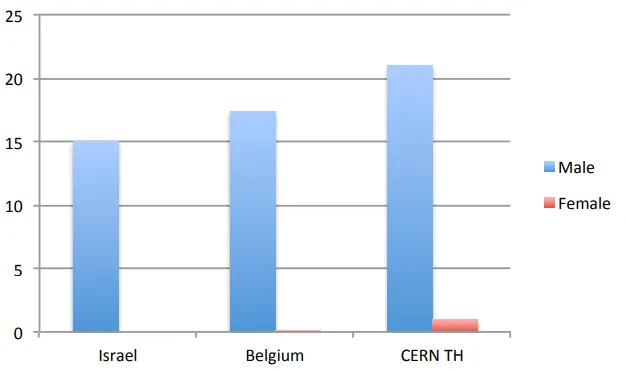
Variation by rank: glass ceilings
Variations by group
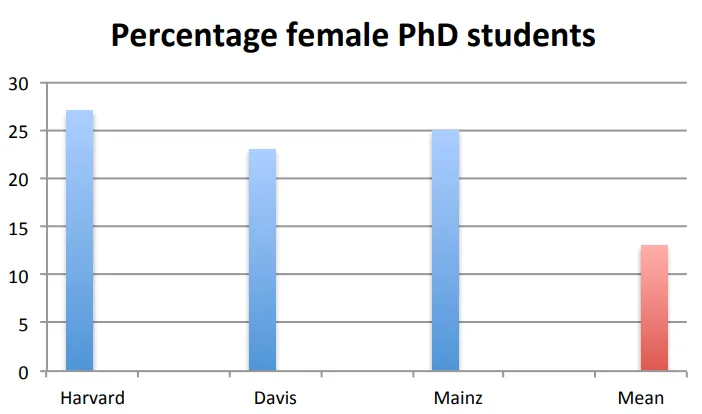
In general, higher percentages of female PhDs and postdocs found in groups with female faculty
Analysing data
• Reasons for drop at postdoctoral level?
• Reasons for variations by country and group?
• Demographic trends may be useful beyond gender considerations e.g. in Germany faculty have on average 1.7 postdocs but in France they have only 0.3.
Other gender data
• Postdoctoral applications – gender breakdown of applications to European groups via Leuven application website is already monitored.
• Representation of women at conferences, in organising committees and in seminar series
• Diversity of journal editors
Monitoring data
• Monitoring gender data seems a passive action but it is often very effective. Mea culpa:
– Almost all personal fellowship applications in our group were from men -> we now proactively invite women to apply.
– We aim for at least 10% of speakers in our seminar series and workshops to be female.
– We circulate postdoc and PhD openings via women in strings mailing list and other related networks
Committee on gender issues in string theory
• Following the conclusion of the COST project, the aim is to establish a committee working on gender issues in string theory
Goals of committee
•Monitor and analyse gender data
• Promote and coordinate the “String theory and gender” workshops
• Develop a sustainable web resource collecting data and information on gender issues in string theory. (Following astronomy example.)
• Maintain (and expand?) the Women in Strings mailing list.
– Announcements of positions, conferences, workshops, fellowship opportunities
– Networking and support for young researchers
• Promote gender and diversity training in all institutions and for all fellowship panels.
– Unconscious biases – Biases in recommendation letters
– Underestimating leadership potential in women – Gender biases in citations Review of literature on women in physics: http://iopscience.iop.org/book/978-1-6817-4277-9.pdf
Full talk in pdf here.